Best Smart Rain Sensor 2026: A Complete Buyer's Guide
As smart home ecosystems become more connected, homeowners are looking beyond cameras and doorbells for devices that protect their property from the elements. One of the most underrated additions to any connected home is a smart rain sensor.
Whether you want to protect an open skylight, automate garden irrigation, or simply receive an alert before a storm soaks your balcony, a WiFi or Zigbee rain sensor can save you money and stress. In this guide, we’ll explain what a smart rain sensor does, what features to look for, and why the Xingliao Tuya Smart Rain Sensor stands out as one of the best options available today.
What Is a Smart Rain Sensor?
A smart rain sensor is a compact device that detects rainfall or standing water and sends real-time notifications to your smartphone. Most models connect through 2.4GHz WiFi or Zigbee 3.0 and integrate with apps like Tuya Smart or Smart Life, allowing you to create automated scenes with other smart devices.
For example, when rain is detected, your sensor can trigger:
- Window or skylight motors to close automatically
- Smart curtains to retract
- Outdoor awnings to fold in
- Garden irrigation systems to pause

This kind of home automation turns passive weather monitoring into active protection.
Why You Need a Smart Rain Sensor in 2026
Weather patterns are becoming less predictable. Even a short rainstorm can damage indoor furniture, electronics, or flooring if a window is left open. A WiFi rain detector gives you instant alerts no matter where you are, so you can react in seconds rather than hours.
Here are the top reasons homeowners are adding smart rain sensors to their setups:
- Real-time alerts — Know the moment rain starts.
- Automatic scene linkage — Connect with curtains, windows, sprinklers, and more.
- Energy efficiency — Pause irrigation when nature does the watering.
- Flood detection — Many models also detect standing water and leaks.
- Affordable protection — A small investment compared to water damage repair costs.
What to Look for in a Smart Rain Sensor
When comparing models, focus on these key features:
Connectivity
WiFi rain sensors connect directly to your router and are easy to set up. Zigbee rain sensors require a hub or gateway but offer more stable mesh networking and longer battery life. If you already use a Tuya Zigbee hub, the Zigbee version is often the better long-term choice.
App Compatibility
Look for sensors that work with Tuya Smart or Smart Life. These apps support thousands of devices and offer powerful automation rules, also known as scenes.
Battery Life
Battery-powered sensors are easier to install outdoors. WiFi models typically last around one year, while Zigbee models can last up to three years on two AAA batteries.
Detection Sensitivity
A good sensor should detect light rain quickly without false alarms from humidity. Look for models that advertise high-precision detection.
Build Quality
Outdoor installation requires a device that can handle temperature changes. A reliable operating range of -10°C to 50°C is ideal.
Xingliao Tuya Smart Rain Sensor: Best Value Pick
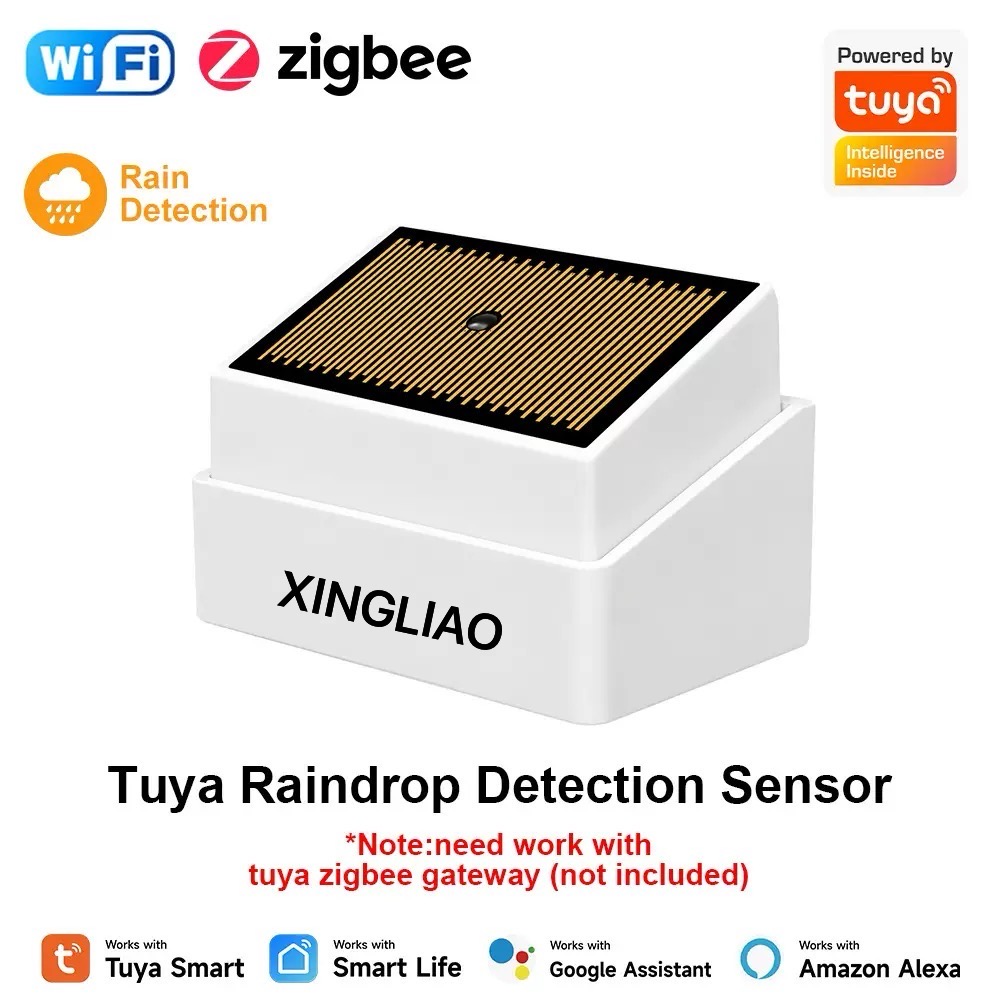
At Xingliao Smart Home, we designed our Tuya Smart Rain Sensor to deliver professional-grade weather awareness at a price that fits everyday budgets.
The Xingliao rain sensor offers:
- 2-in-1 detection for both rainfall and water flooding
- WiFi and Zigbee options to match your smart home setup
- Smart Life / Tuya Smart app integration
- Automatic scene linkage with windows, curtains, irrigation, and more
- Compact design measuring just 70 × 24 × 21 mm
- Long battery life — up to 1 year on WiFi, up to 3 years on Zigbee
- Operating range of -10°C to 50°C for indoor or outdoor use
You can choose the version that fits your network: the WiFi model for simple setup, or the Zigbee model for stronger mesh performance and longer battery life.
Shop the Xingliao Smart Rain Sensor now at xingliaoshop.com.
How to Install and Use a Smart Rain Sensor
Installation is straightforward. Most models can be mounted on a window frame, balcony railing, or outdoor wall using the included bracket or adhesive backing.
After setup in the Tuya Smart app, create simple automations:
- If rain detected → close smart window opener
- If rain detected → pause irrigation timer
- If rain detected → send push notification to phone
These automations run locally or through the cloud depending on your hub, giving you flexibility and reliability.
Smart Rain Sensor vs Traditional Rain Gauge
A traditional rain gauge only measures how much rain has fallen. A smart rain sensor tells you when rain starts, sends alerts, and triggers actions. For home automation, the smart sensor is the clear winner.
Final Thoughts: Is a Smart Rain Sensor Worth It?
If you own smart curtains, motorized windows, a sprinkler system, or an outdoor balcony, a smart rain sensor is one of the easiest ways to add real value to your smart home. It protects your property, reduces manual monitoring, and works quietly in the background.
For a reliable, affordable, and feature-rich option, the Xingliao Tuya Smart Rain Sensor is a top choice in 2026.
Ready to make your home weather-aware?
👉 Shop the Xingliao Smart Rain Sensor at xingliaoshop.com
Xingliao Smart Home — Smart Living for Everyone. Explore premium smart home devices, from intelligent security to climate-aware automation, at xingliaoshop.com.